Living Seasonally: Finding More Meaning in the Everyday Year
Some parts of the year announce themselves. The first genuinely warm evening sends windows open. A cool September morning changes what you reach for before breakfast. December brings familiar music back into rooms that have been quiet all year. Then January arrives with pale light, bare branches and a different kind of calm.
Living seasonally begins with noticing those shifts and allowing them to matter. The year already changes the light, the air, what grows, what we eat and how we move through our days. A seasonal life simply pays closer attention. Small choices can help each part of the year feel distinct, giving ordinary routines more texture without requiring a constant stream of new things. That idea sits at the heart of Clearly Seasonal: the changing year is something to notice, enjoy and bring gently into everyday life.
A Year You Can Actually Notice
Modern life makes it surprisingly easy for one month to resemble the next. Homes stay at a steady temperature, groceries arrive from everywhere, entertainment is always available, and many routines continue unchanged from January through December.
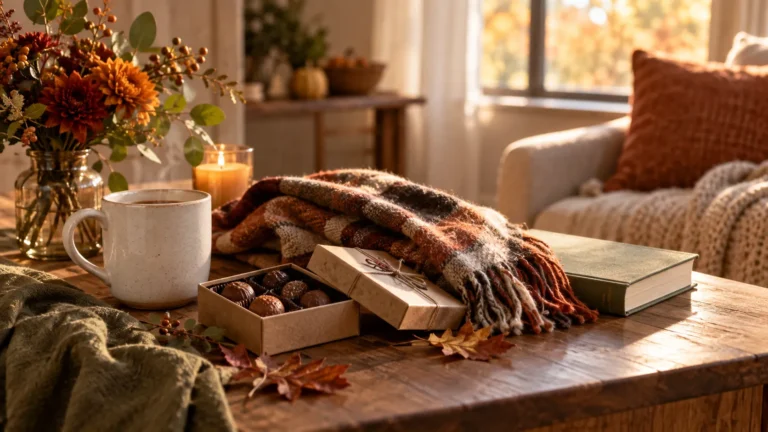
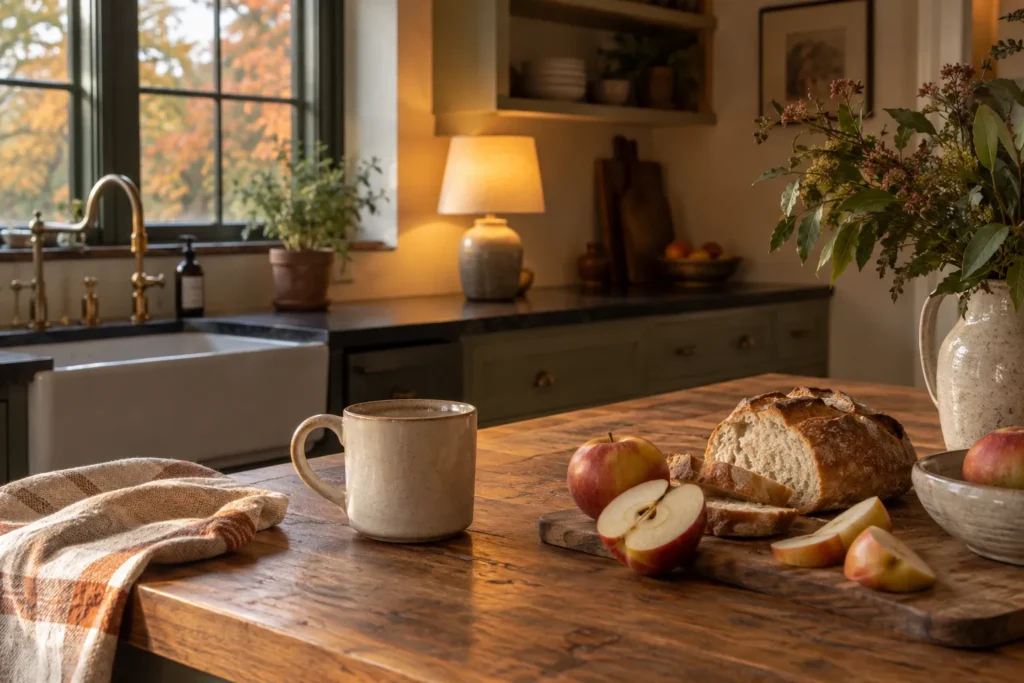
There is comfort in that consistency, yet a little seasonal contrast can make time feel richer. Spring can bring open windows and the return of flowers to the table. Summer might mean eating outside whenever the evening allows it. Autumn can arrive through earlier lamps, apples on the counter and a heavier blanket returned to the sofa. Winter may invite slower breakfasts, candlelight at dinner and an extra half hour with a book after dark.
These details give the year landmarks. They help us remember where we are in it.
Seasonal living can be especially meaningful because so much of it is temporary. Peonies disappear, daylight shifts and strawberries taste best for a short stretch. A favorite wool throw feels welcome again after months in a cupboard. The fact that these things come and go is part of their pleasure.
Let the Season Change the Shape of the Day
One of the easiest ways to live more seasonally is to let the daily routine move slightly with the calendar. Even familiar habits can take on a different character when they follow the light and weather.
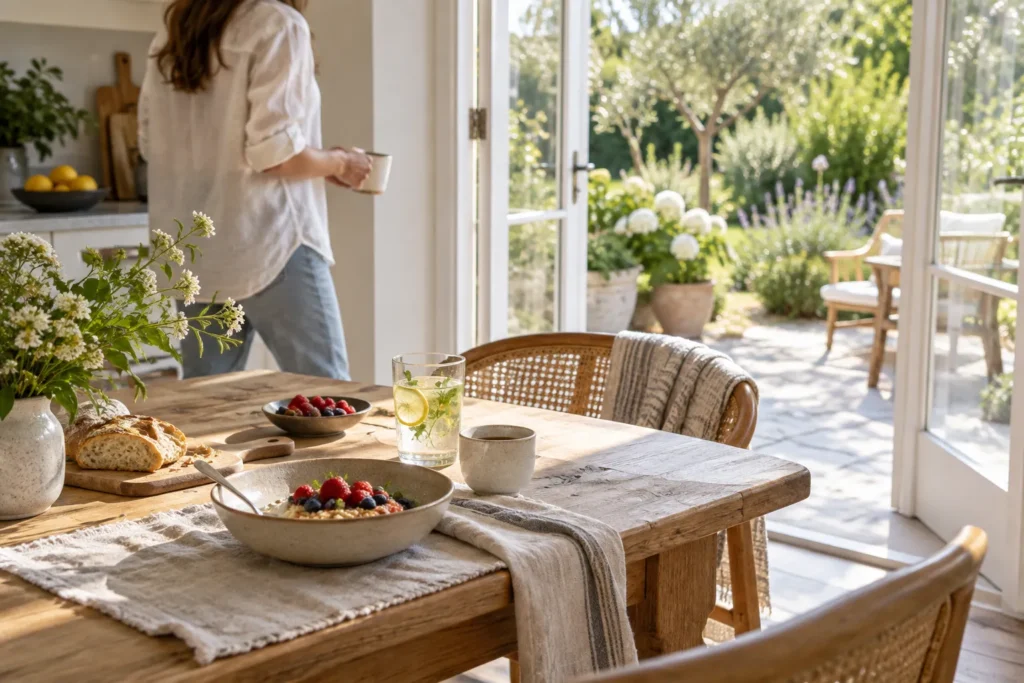
A summer morning may begin earlier because the room is already bright. Coffee can move to the porch, breakfast can become colder and simpler, and an evening walk can happen long after dinner. In autumn, the same day may feel better with a warmer breakfast, a lamp switched on before sunset and dinner made a little earlier.
Winter often asks for more light and warmth indoors. Spring brings the opposite impulse: opening, airing, clearing and spending a few extra minutes outside simply because it finally feels good again.
None of these changes need to become formal habits. Think of them as seasonal permissions. Read in the garden while there is still light, or make soup on the first wet, chilly evening that seems to call for it.
Wash the lighter bedding when the windows can stay open all afternoon. Move the chair toward the sun in February. The point is to respond to what the season is already doing.
Bring the Outdoors Closer
Seasonal atmosphere often comes from the simplest natural cues. They bring the outside world into view without asking the room to become a themed display.
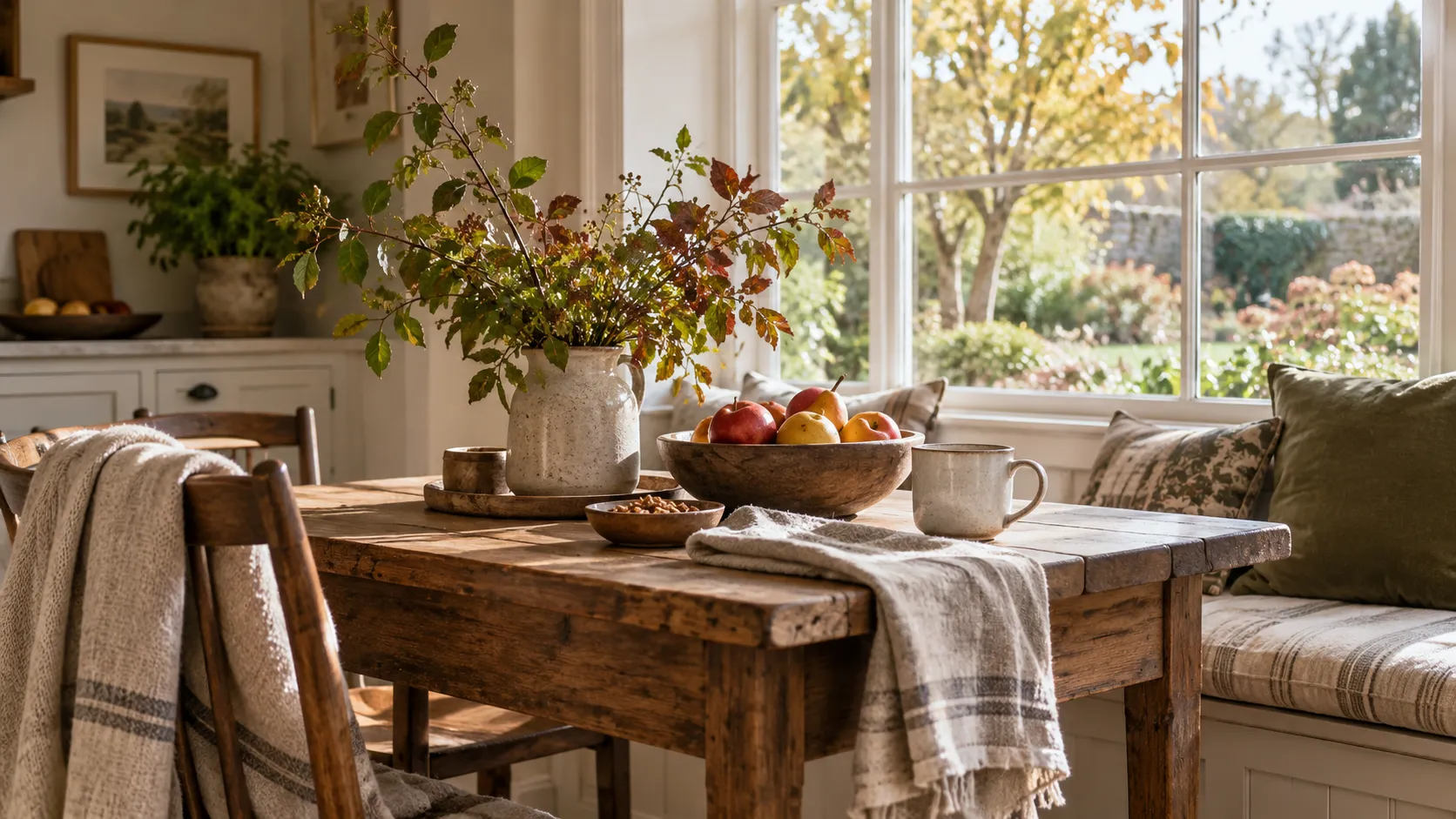
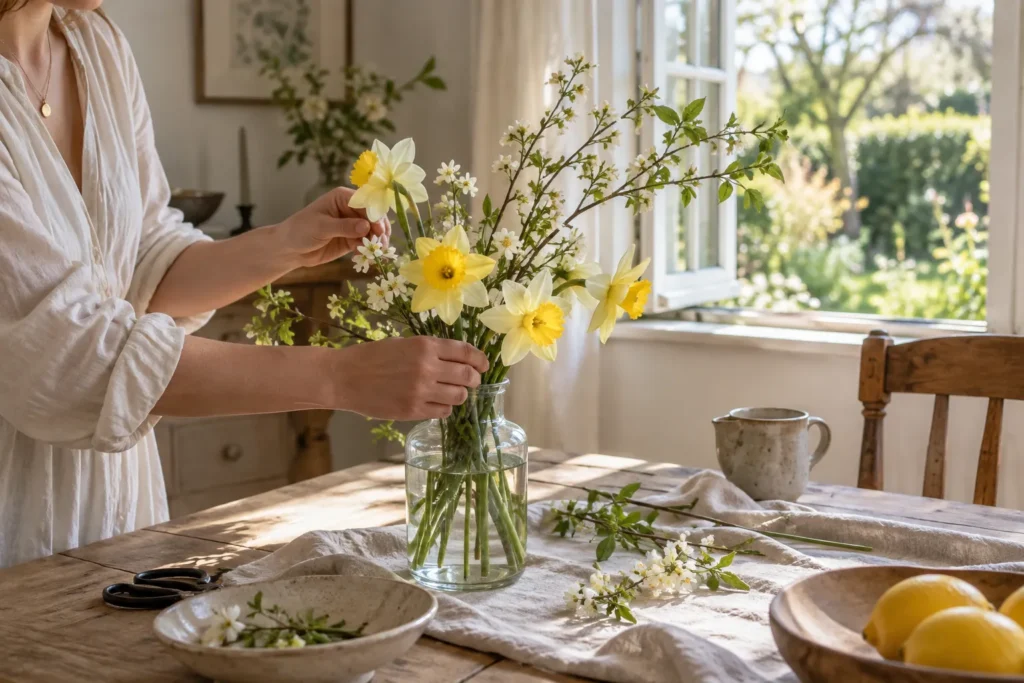
A branch clipped from the garden can say more about October than a cupboard full of decorations. Daffodils in April, herbs on a summer windowsill, hydrangeas drying toward autumn or a bowl of winter citrus can quietly change the mood of a room. Even the view through a clean window becomes part of the interior when the season outside feels visible.
This approach keeps seasonal decorating flexible. There is no need to transform the entire house every few months. A few materials, colors and natural elements can be enough.
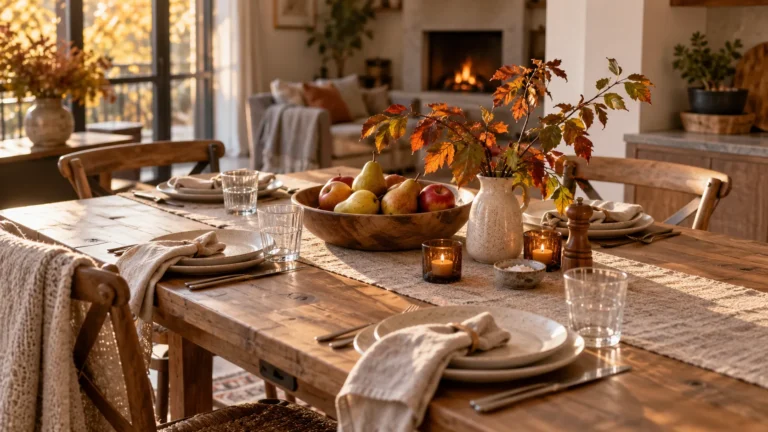
In spring, glass, linen, fresh green and soft floral color feel at home. Summer suits lighter fabrics, woven textures and things gathered from outdoors. Autumn welcomes wood, wool, deeper earth tones and leaves with imperfect edges. Winter often feels best with warm light, evergreen branches, heavier textiles and surfaces that are allowed to look calm.
A seasonal home can also evolve through editing and rearranging. Heavy blankets can leave the room in May. A reading chair can move closer to a window in winter. A tray for cold drinks can appear near the back door in summer, while a basket for hats and gloves returns when mornings turn sharp. These adjustments encourage us to look again at what we already own before adding anything new.
The most convincing seasonal homes usually contain signs of the actual season alongside the personality of the people who live there. The room still feels familiar, only more aware of the moment outside.
Give Ordinary Rituals a Seasonal Turn
The strongest seasonal traditions are often ordinary things done with a little more attention. Their familiarity is exactly what makes the seasonal variation noticeable.
A morning drink can change with the weather. So can the place where you drink it. Weekend breakfast might move outdoors in June, then return to the kitchen table in October with a pot of coffee and something warm from the oven. A Sunday evening routine can shift from watering patio plants to putting on music and making dinner while dusk gathers early outside.
Food is one of the easiest ways to notice the year. This can be as simple as buying fruit when it is especially good, making the first tomato sandwich of summer, roasting squash in autumn or keeping clementines in a bowl through December. Seasonal eating does not have to become a project to create memory.
The same is true of sound and scent. Certain albums belong to certain stretches of the year. Fresh laundry drying near an open window has a spring feeling. Coffee brewing before sunrise feels different in November than it does in July.
Repeated gently, these small rituals begin to mark time. Years later, they are often the details we remember first.
Make Room for Anticipation and Return
Part of seasonal pleasure comes from waiting. Anticipation gives familiar things a little more weight when they return.
When every pleasure is available all year, it loses some of its shape. Saving a few things for their natural moment gives them something to return to.
This might mean packing away a favorite autumn throw in spring, keeping one Christmas recipe for December, waiting until the first hot week for a particular summer drink or bringing out a certain tablecloth when outdoor dinners begin again. These gestures are modest, yet they build anticipation.
Children often understand this instinctively. They know which decorations signal Halloween, which mug belongs to Christmas cocoa and which summer outing means school is finally over. Adults can create the same sense of return without turning the year into a schedule of elaborate traditions.
The best seasonal markers are usually easy to repeat. They survive busy years. They still work when budgets change, when homes change and when celebrations become smaller or larger.

Keep the Traditions That Actually Feel Like Yours
There is no universal version of a well-lived season. The details that matter most are often deeply personal.
Someone may love the first snowfall and barely care about holiday decorating. Another person may look forward to Halloween for months. Summer might mean garden dinners, lake weekends, baseball on the radio or simply sleeping with the windows open. Spring might be defined by cleaning, planting, walking farther after dinner or buying the first bunch of tulips.
The goal is to notice which moments create a genuine sense of recognition. Those are the details worth repeating.
A useful way to begin is to think through the year and choose one or two things you genuinely look forward to in each season. Keep them small enough to happen. A first picnic, a Sunday soup, a vase of lilacs, an evening on the porch, a December breakfast, a January walk after fresh snow.
Over time, these moments become a personal calendar layered over the official one. They give each stretch of the year a character you can recognize when it returns.
Let the Year Have Texture
Living seasonally does not require a perfectly styled home or a long list of traditions. It grows through attention.
Notice when the light changes in the room where you drink your morning coffee. Bring home the fruit, flowers or branches that seem to belong to the week you are in. Let dinner, music, textiles and weekend plans shift a little as the weather changes. Keep the rituals that make you glad they have returned.
A year made from these small distinctions feels less like twelve interchangeable months. It becomes a sequence of arrivals, familiar pleasures and brief moments worth noticing while they are here.