The Everyday Fall Table: Cozy Ideas for Meals and Casual Gatherings
A fall table does not have to wait for a holiday, a dinner party or a perfectly planned menu. Some of the nicest autumn meals happen on ordinary evenings when the light fades early, something warm is on the stove and everyone lingers at the table a little longer than they did in summer.
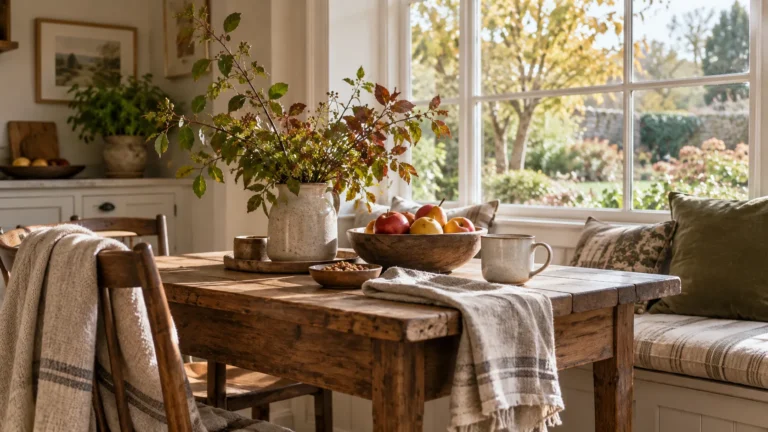
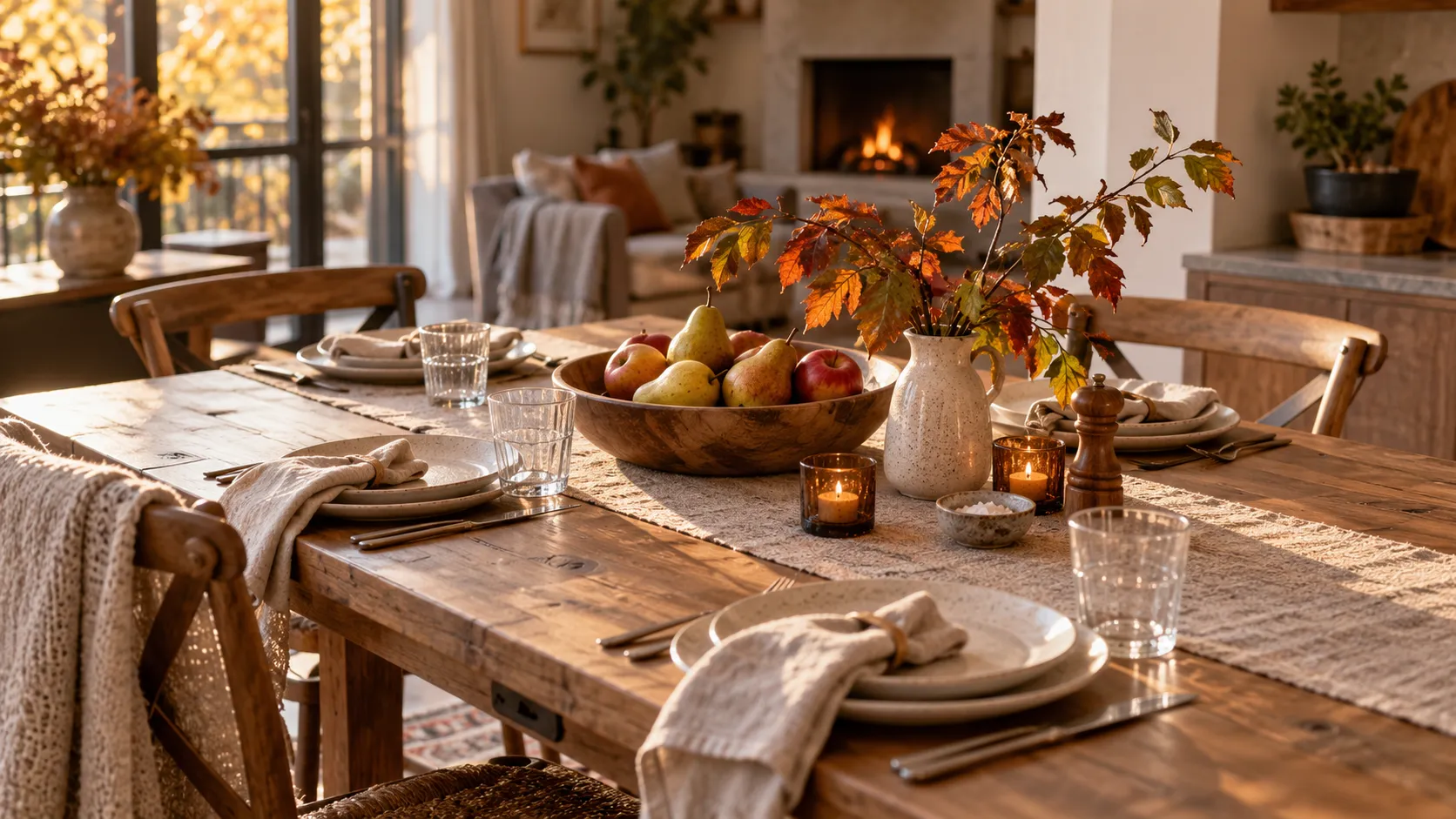
That is where the everyday fall table comes in. It can be as simple as a linen runner, a low bowl of apples, warmer dishes and a few small details that make the season visible without making dinner feel formal. The aim is comfort, ease and a sense that the table belongs to this particular stretch of the year, whether you are eating soup on a Tuesday or inviting two friends over on Saturday.
Start With a Table That Can Still Be Used
The most inviting seasonal tables are easy to sit down at. Leave enough room for plates, serving dishes, drinks and the small movements that make a meal comfortable.
Begin by clearing anything that has accumulated on the table. Then add only what can stay without getting in the way. A narrow runner, low bowl or small vase usually gives the table enough structure for everyday use.
Keep the center low. Branches, flowers or fruit should never make people lean around them to talk. If a centerpiece needs to be removed before every meal, it is probably doing too much.
This practical approach matters even more in smaller homes. The table may serve as a place for breakfast, homework, work or folding laundry during the day, so seasonal styling should be easy to move and simple to reset.
Let Autumn Food Do Some of the Decorating
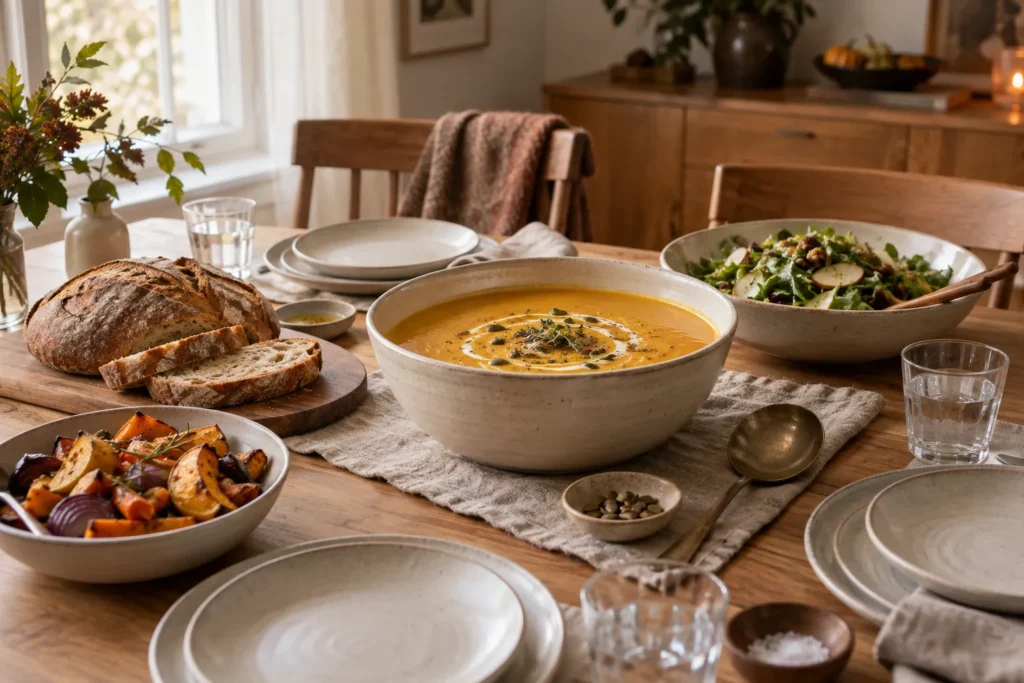
Food carries its own color, texture and sense of season. A bowl of pears, a loaf of bread, roasted squash or a platter of apples can make the table feel autumnal without adding another decorative object.
This is especially useful for casual gatherings. A pot of soup, a rustic salad, warm bread and a simple dessert can create plenty of visual interest once they are placed on the table. The meal itself becomes part of the atmosphere.
Choose serving pieces that let the food lead. Wood boards, plain ceramic bowls and simple platters work well because they feel useful and relaxed. They also mix easily with dishes you already own.
Seasonal ingredients can change through the weeks. Early Fall may bring tomatoes, figs and late summer herbs, while cooler evenings invite squash, apples, pears, mushrooms and deeper flavors. Let the table follow what you are actually cooking.
Use Texture to Make the Table Feel Warmer
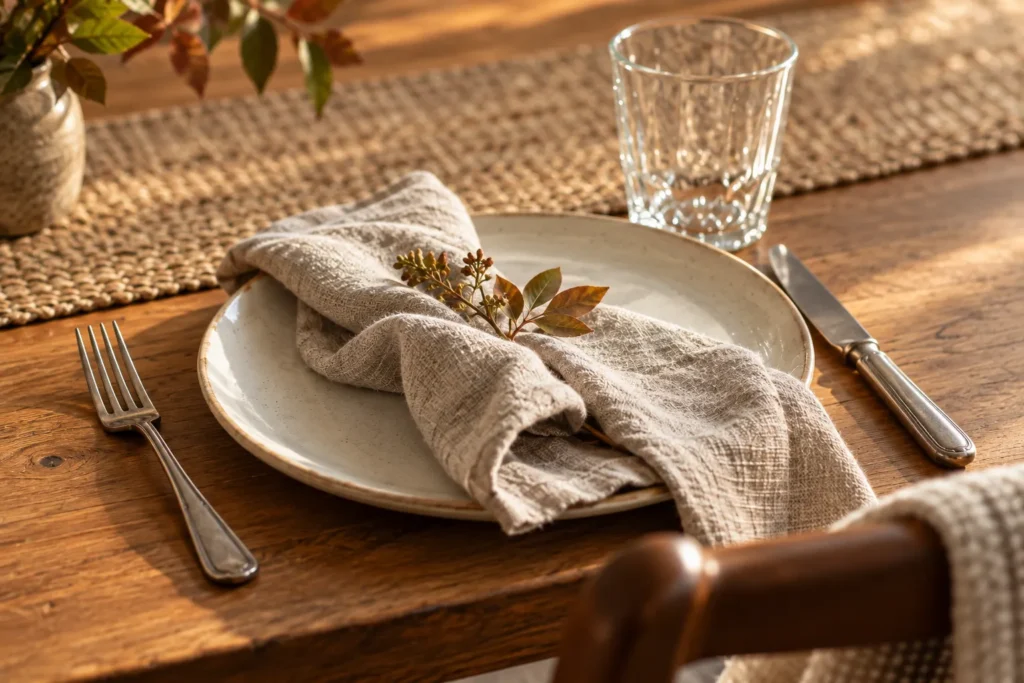
Autumn is a good time to bring back table linens with a little more weight. Linen, washed cotton and softly textured fabrics can make an ordinary meal feel warmer without making it formal.
A runner is often enough for daily use. If you prefer a bare wood table, folded cloth napkins or a small fabric mat under a centerpiece can introduce texture in a quieter way.
Mixing materials helps the table feel relaxed. A wood surface, ceramic plates, linen napkins and a glass tumbler each reflect light differently, creating depth even when the palette stays neutral.
There is no need for everything to match. Pieces collected over time often feel more welcoming than a fully coordinated set, especially for a casual meal with friends or family.
Bring in One Natural Seasonal Element
A single natural detail can anchor the whole table. Autumn branches, dried grasses, seed heads, herbs, apples or pears all work well because they already belong to the season.
Try a short branch in a low vase, a shallow bowl of fruit or a small cluster of leaves gathered from outside. Keep the arrangement loose enough that it feels connected to everyday life.
Pumpkins can work too, particularly in October, though one or two are usually enough. A small cream or muted green pumpkin can sit beside foliage or fruit without turning the table into a themed display.
Natural materials also make the table easy to change. When the leaves dry or the fruit is eaten, replace them with whatever looks right that week. The table stays seasonal because it continues to respond to what is happening outside.
Let the Lighting Change the Meal
Autumn dinners often begin in one kind of light and end in another. That shift can be part of what makes the table feel special.
If daylight is still coming through the windows, let it fade naturally while the meal begins. As the room darkens, use nearby lamps or a pair of candles to soften the transition into evening.
Keep the lighting low enough to feel warm while still making the food and table easy to see. Bright overhead light can flatten the textures and colors that make autumn meals feel inviting.
For a weeknight dinner, a table lamp across the room may be all you need. For casual company, a few small candles can add a little occasion without making the gathering feel ceremonial.
Make Casual Company Feel Easy
A fall table should make it easier to gather, not create another reason to postpone having people over. Plan around food that can be shared and served without constant attention.
A soup or braise that can stay warm, a salad prepared ahead and bread placed in the middle of the table create a relaxed meal. Dessert can be as simple as sliced cake, baked apples or cookies with coffee.
Set out water, napkins and serving utensils before guests arrive so you can sit down sooner. If the table is small, serve part of the meal from the kitchen and keep only what everyone needs within reach.
Comfort is the strongest form of hospitality. A table that allows people to help themselves, refill a glass and stay for another cup of coffee will usually feel more welcoming than one arranged too carefully to touch.

Let the Table Change Through Fall
The everyday fall table can shift gradually from September into November. Early in the season, lighter linen, fresh herbs and late summer produce may still feel right.
As the weather cools, deeper colors, heavier fabrics and warmer food can take over. A branch of green leaves can become rust-colored foliage, and a bowl of tomatoes might give way to pears or small squash.
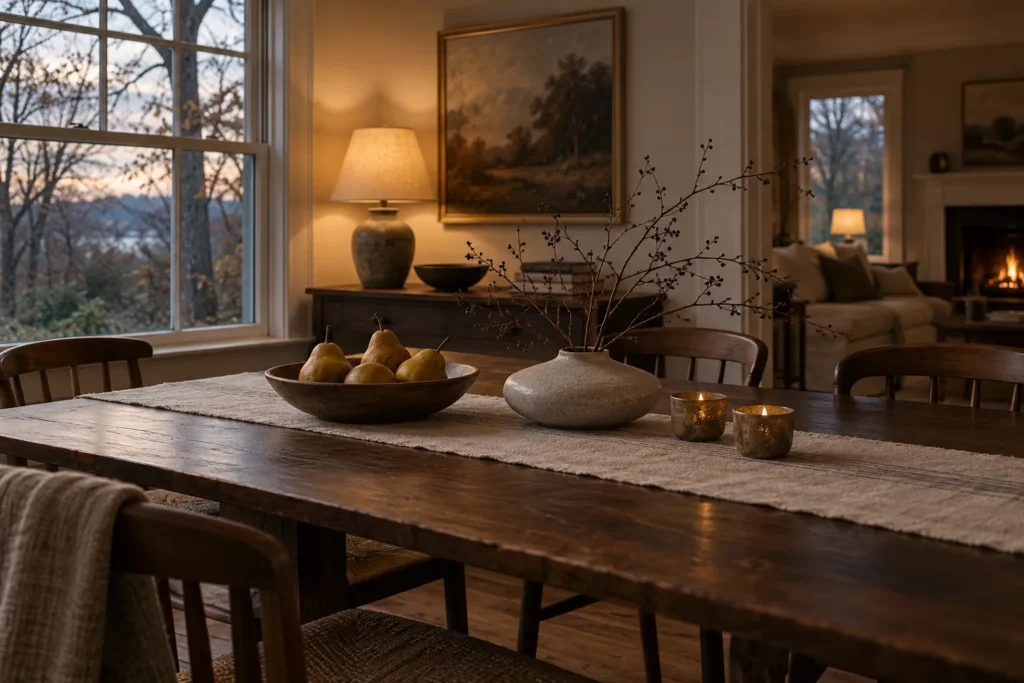
By late autumn, the table may become simpler again. Bare branches, dark wood, warm lamplight and one bowl of fruit can carry the season without much decoration.
These small changes keep the table connected to the actual moment. They also make each part of autumn feel distinct instead of asking one arrangement to represent the whole season.
A Table Worth Using Every Day
The most useful fall table is one that still feels natural when there are no guests and nothing special on the calendar. A little linen, seasonal food, softer light and one natural detail can be enough to make an ordinary meal feel more rooted in the season.
Keep the table easy to clear, easy to reset and comfortable enough to use often. Then let gatherings grow from that everyday rhythm. When the setting already feels warm and lived in, inviting someone to stay for dinner becomes a much smaller leap.
Autumn gives us plenty of reasons to come back to the table. The season feels richer when that space is ready for both the quiet meals and the spontaneous ones.