Welcoming Autumn In: Easy Fall Decorating Ideas for a Warm Home
Autumn rarely arrives all at once. The light turns softer, evenings cool down, a few leaves begin to change, and suddenly the house starts asking for different things. The throw that felt unnecessary in August looks inviting again. Lamps come on earlier, the kitchen fills with warmer food, and deeper colors begin to feel at home.
Fall decorating can follow that same gradual rhythm. A room does not need a complete seasonal makeover to feel connected to autumn. A few shifts in texture, light, natural materials and everyday objects can change the atmosphere while keeping the home familiar. The goal is to make the season visible in ways that feel comfortable enough to live with for weeks, rather than filling every surface simply because the calendar changed.
Start With What Autumn Already Changes
Before bringing anything new into the room, notice what has changed outside it. Autumn offers its own palette, materials and mood, and those cues can guide the home more naturally than a box of seasonal decorations.
The earliest changes are often subtle. Morning light becomes lower and warmer. Gardens begin to fade into seed heads, grasses and deeper greens. Apples, pears and squash return to the kitchen, while branches and leaves take on more interesting shapes and colors.
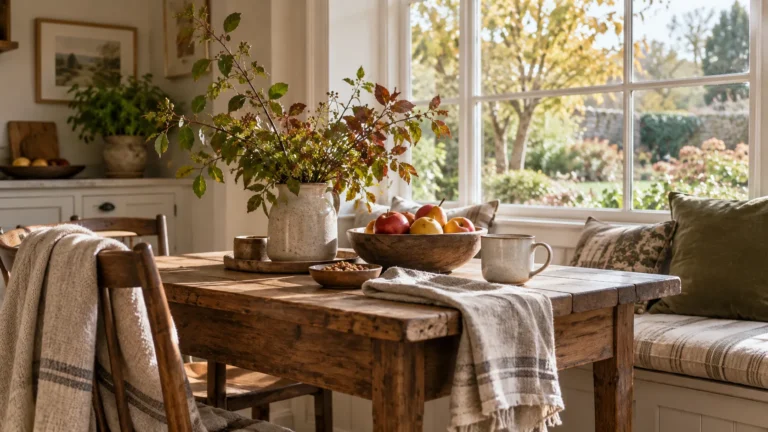
Use those details as a starting point. A branch with turning leaves on the dining table can be enough to make the season present. A bowl of apples on the counter, a basket near the door or a wool blanket returned to the sofa can do the same.
This approach also makes the transition easier to adjust as autumn develops. Early September might still feel light and open, while late October naturally invites heavier texture, warmer light and richer color. Let the house change in stages instead of decorating for the entire season in one afternoon.
Bring Back Texture Before Adding More Decor
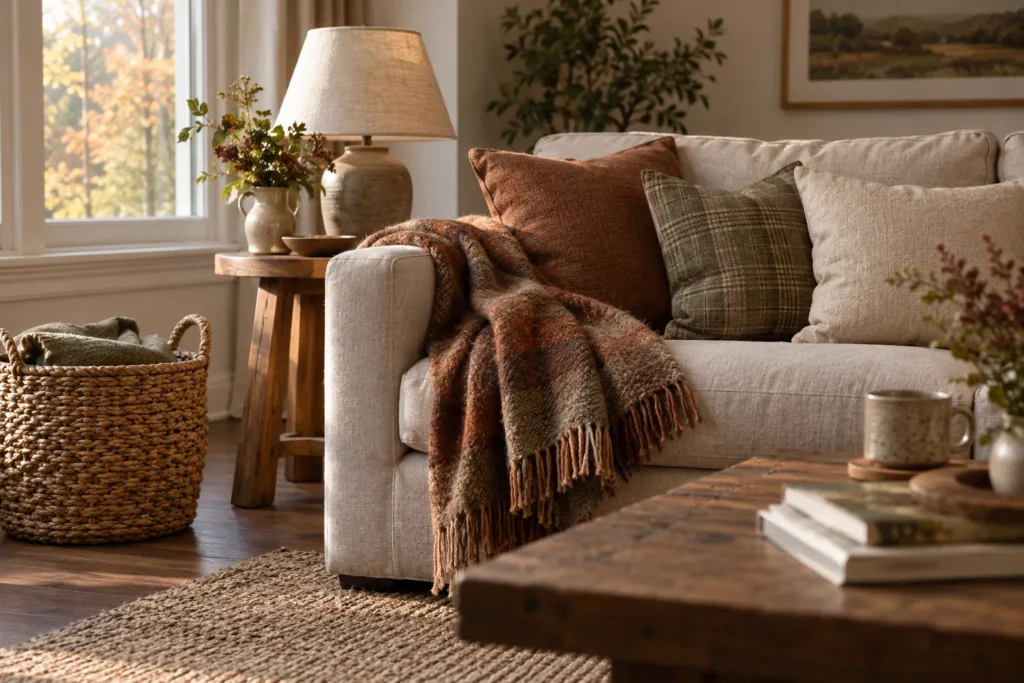
Texture is one of the quickest ways to make a room feel warmer without asking it to look obviously decorated. Autumn is a natural time to return materials that were packed away for summer.
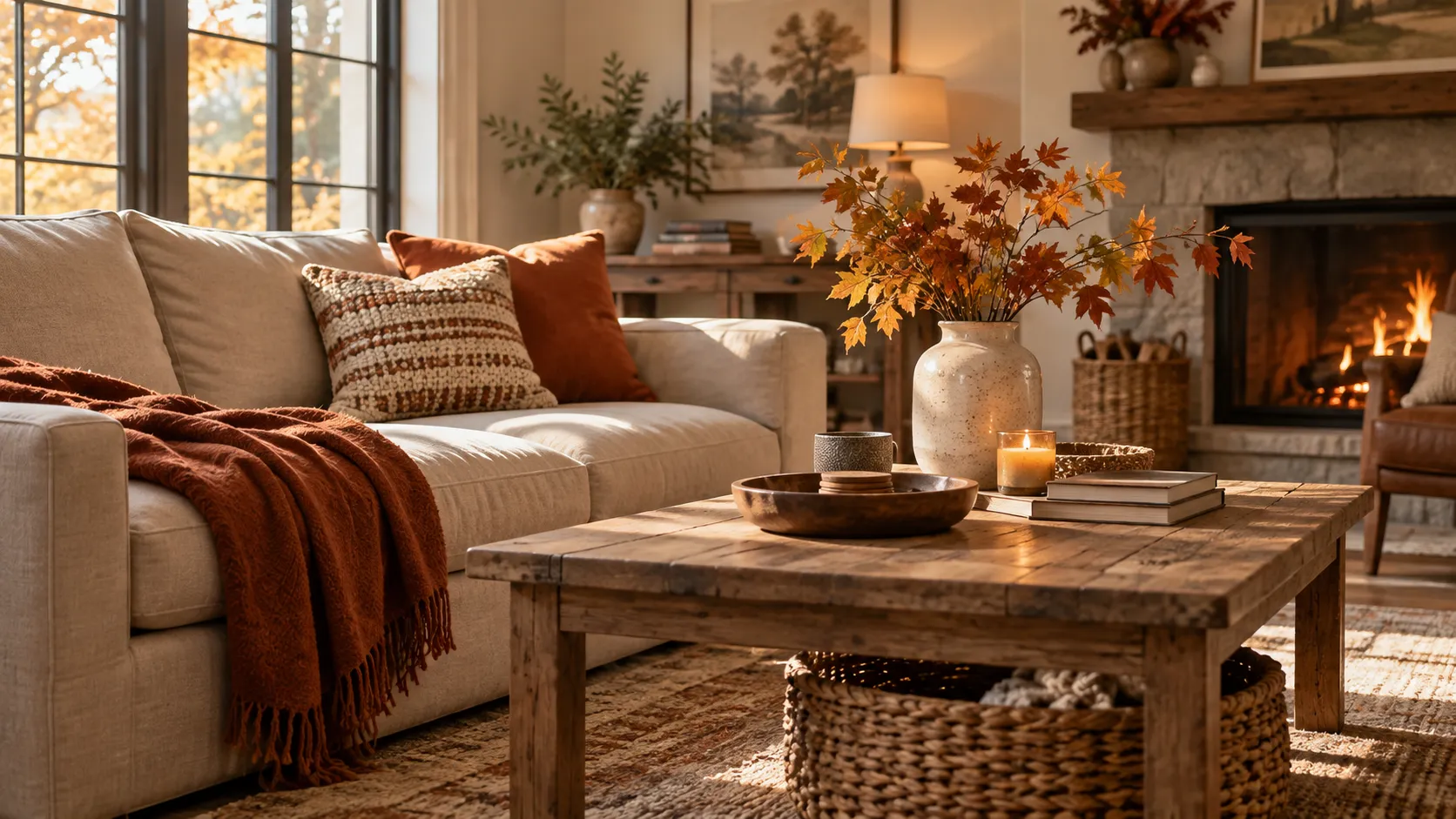
Start with the places where comfort matters most. Add a knit or wool throw to the sofa, bring a heavier blanket back to the foot of the bed, or replace a crisp summer cushion cover with linen, brushed cotton or a soft woven fabric. Even one or two changes can make a room feel more settled.
Texture can come from practical objects too. A woven basket for extra blankets, a wood tray on the coffee table or a thicker runner across the dining table adds seasonal weight while still serving a purpose. These pieces tend to stay useful long after a decorative moment has passed.
Keep the balance relaxed. If every chair, table and shelf receives another layer, the room can quickly feel crowded. Choose a few places where softness and material contrast will actually be noticed.
Use Natural Materials as the Main Seasonal Accent
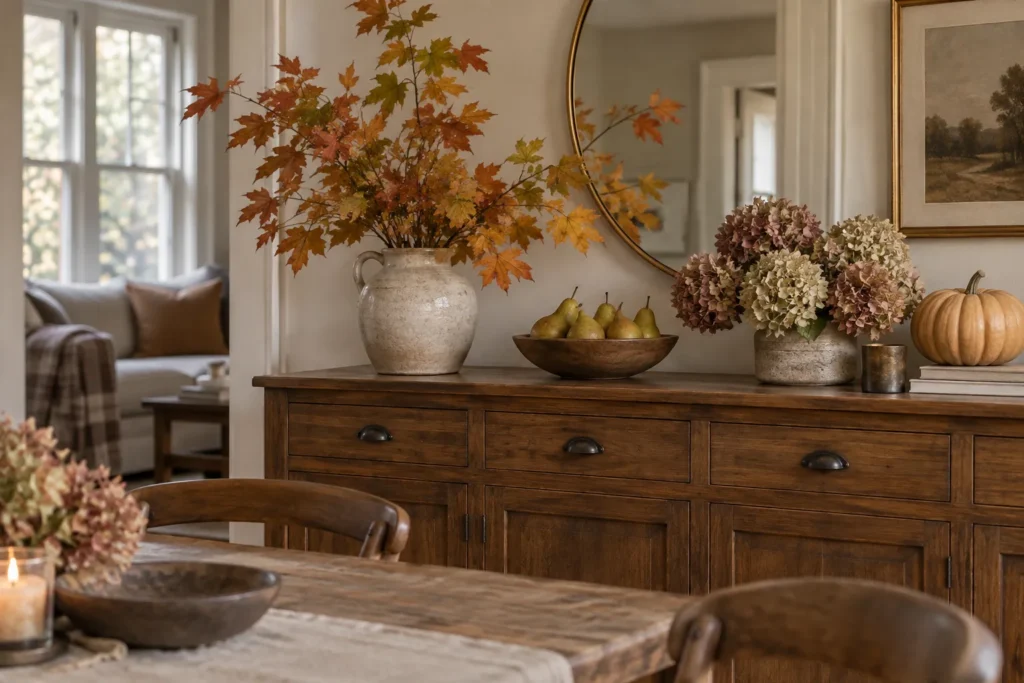
Autumn gives you plenty to work with before you ever reach for manufactured decor. Branches, leaves, grasses, fruit, wood and dried flowers all carry the season into a room with very little effort.
A loose arrangement of branches can suit an entry table or dining room. Dried hydrangeas, seed heads or ornamental grasses can work well on a mantel or sideboard. In the kitchen, seasonal produce can become part of the visual language simply by being left where it is used.
Pumpkins can certainly belong, especially later in the season, though they do not need to become the whole decorating plan. One or two interesting shapes mixed with wood, linen, pottery or foliage usually feel more considered than a large collection spread across every room.
Natural materials also age gracefully. Leaves curl, stems dry and fruit gets eaten. That small amount of change helps the home feel connected to the actual season rather than frozen in a display.
Let the Lighting Shift Earlier
Autumn decorating is as much about light as it is about objects. By late afternoon, a room can feel completely different from the same space in midsummer.
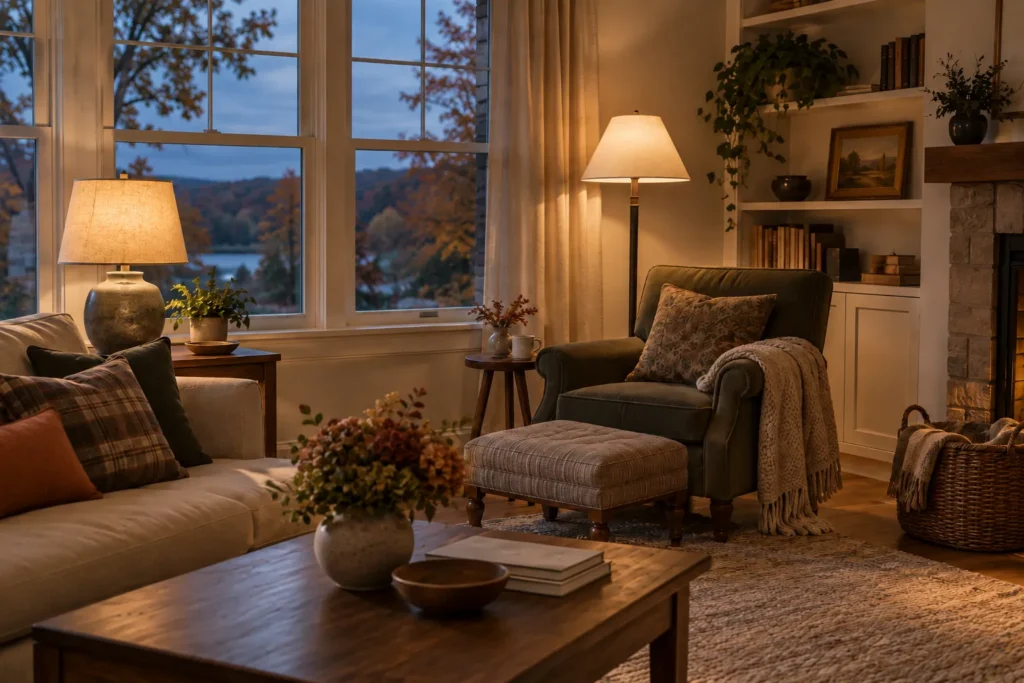
Use lamps earlier in the day and rely less on bright overhead lighting once evening begins. A table lamp in a corner, a floor lamp beside a chair or a small light near the kitchen can make the room feel warmer as daylight fades. Candlelight can add another gentle layer when it suits the space and the moment.
The best lighting changes usually support what you already do. Place light where people read, talk, cook or sit after dinner. A warm pool of light beside an armchair has more impact than several decorative lamps that serve no practical purpose.
This shift also makes autumn feel present before the deeper colors of the season fully arrive. Even on a mild day, earlier lamplight changes the atmosphere of a room.
Give Everyday Surfaces a Fall Edit
Seasonal decorating becomes easier when you work with surfaces that already collect daily life. Coffee tables, kitchen counters, entry consoles and dining tables are natural places for a small autumn adjustment.
On a coffee table, remove one summery object and add a small stack of books, a warm-toned bowl or a low arrangement of foliage. On the kitchen counter, let a wood board, a bowl of apples and a plain ceramic vessel do the work. An entry table might need only a branch, a tray for keys and a lamp that now gets used every evening.
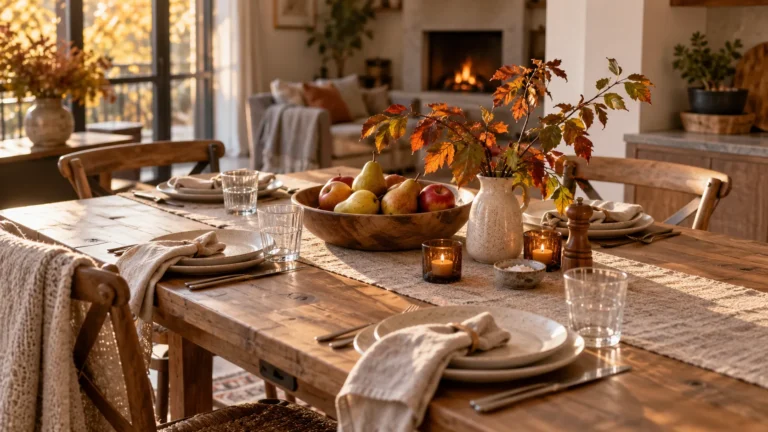
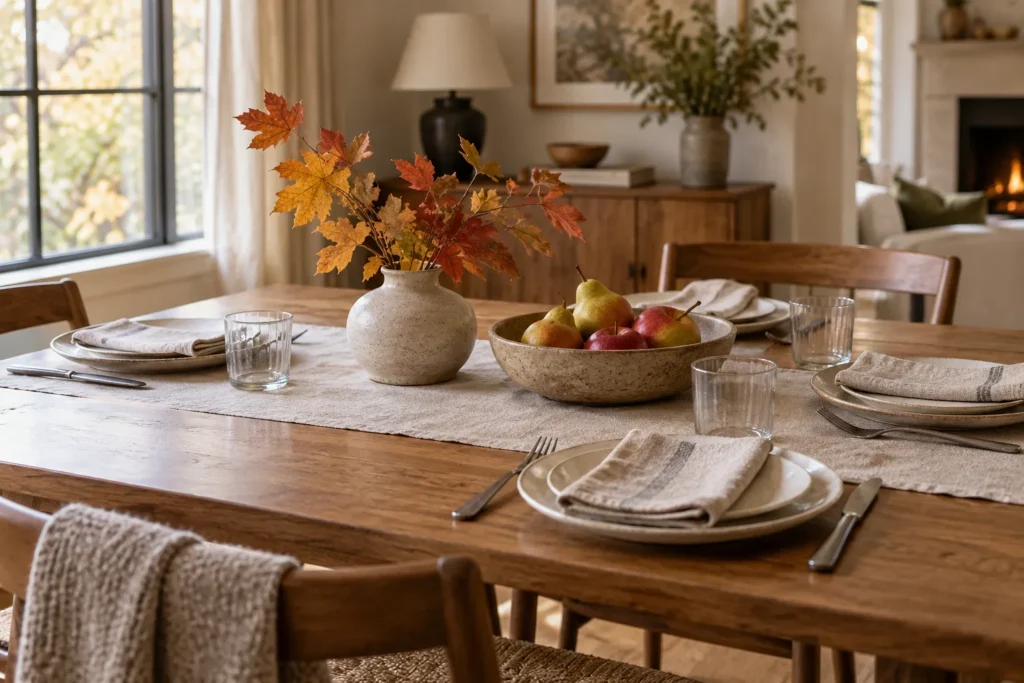
Dining tables benefit from restraint as well. A simple runner, a low vase of leaves or a bowl of pears can carry the season through ordinary breakfasts and weeknight dinners. Keep the center low enough that people can still sit comfortably and see one another.
Editing is useful here because fall decor often grows by accumulation. Taking one or two things away before adding something seasonal helps each change feel intentional.
Keep the Palette Warm, Layered and Familiar
Autumn color can be beautiful without requiring a room to turn orange. The season offers a broad range of tones that work especially well when they are layered into colors already present in the home.
Rust, terracotta, tobacco, moss, ochre, burgundy and deep brown can all add warmth. Cream, stone, muted green and natural wood can keep the room grounded. A neutral room may need only one deeper accent, while a colorful room might respond better to richer versions of shades it already uses.
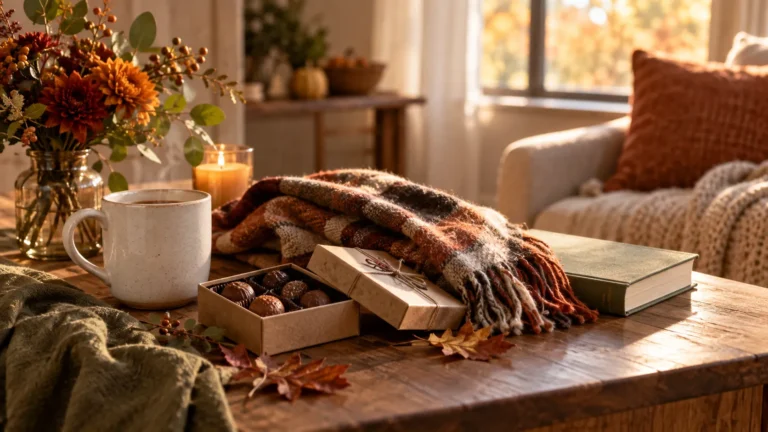
Introduce color through small, movable pieces first. A throw, cushion cover, vase, book or table linen can shift the mood without committing the entire room to a seasonal palette.
The most comfortable result usually feels like an autumn version of your own home. Familiar furniture, art and objects should still lead the room. Seasonal color works best when it settles into that existing story.
Let Autumn Arrive Gradually
A warm fall home grows through small adjustments: softer light, heavier texture, a few natural materials and colors that feel richer as the days cool. None of those changes need to happen at once.
Begin with one place you use every day. Add a blanket to the sofa, bring a branch indoors, switch on a lamp earlier or set a bowl of apples where you will actually reach for them. Then let the season keep changing and respond when the house seems ready for the next layer.
That gradual approach leaves room for October to feel different from September and for late autumn to deepen before winter arrives. The home stays recognizably yours, with just enough of the season inside to make its return feel welcome.